














This PCOS Awareness Month, Let’s Talk About Black Women’s Experiences

September is PCOS Awareness Month, an opportunity to talk about a condition that affects millions of women but continues to be misunderstood, under diagnosed, and under-researched.
Polycystic ovary syndrome (PCOS) is a hormonal condition that can affect ovulation, menstrual cycles, metabolism, fertility, and more. While PCOS affects women across racial and ethnic groups, Black women can experience a higher burden of certain symptoms and health complications.
And understanding those differences matters.
PCOS isn't just about irregular periods or ovarian cysts. For many Black women, it can be part of a much bigger health journey, one shaped by symptoms, access to care, reproductive health education, and whether they feel heard when they seek help.
How PCOS Impacts Black Women
According to the Resilient Sisterhood Project, Black women with PCOS face higher risks of several symptoms and related health conditions, including hirsutism, infertility, insulin resistance, obesity, type 2 diabetes, uterine bleeding, stroke, cardiovascular disease, and metabolic syndrome.
PCOS is also associated with several health concerns that already disproportionately affect Black communities, including diabetes, heart disease, high blood pressure, sleep apnea, depression, anxiety, stroke, and obesity.
That makes PCOS more than a reproductive health conversation. It can affect multiple areas of a woman's health throughout her life.
For some women, the first signs may be extremely irregular periods. For others, it may be stubborn acne, unwanted facial hair, difficulty losing weight, or challenges with fertility. Some women may experience several symptoms, while others may have very few obvious signs.
This variation can make PCOS difficult to identify—and can leave women searching for answers for years.
The Diagnosis Gap Is Part of the Problem
PCOS is estimated to affect 1 in 10 women, yet up to 75% of women with PCOS remain undiagnosed, according to the Resilient Sisterhood Project.
For Black women, the diagnosis journey can be complicated by another issue: not feeling heard in healthcare settings.
Black women with PCOS may have their symptoms minimized, normalized, or dismissed. A period that is extremely irregular may be brushed off. Excess facial hair may be treated as purely cosmetic. Difficulty losing weight may be reduced to diet or willpower without exploring what could be happening hormonally or metabolically.
These experiences can delay diagnosis and leave women without the information or support they need.
Healthcare doesn't exist in a vacuum, either. Experts point to social determinants of health and systemic factors including racism, sexism, and other forms of inequity as contributors to the disparities Black women experience.
When a woman repeatedly feels like her concerns aren't being taken seriously, it can become harder to advocate for herself or know when something isn't right.
Reproductive Health Education Matters
Awareness doesn't start in the doctor's office. It starts with having the information to recognize what's happening in your own body.
The Century Foundation's A Reproductive Justice Outlook highlights the importance of centering Black reproductive health in conversations about menstruation and conditions like PCOS.
Reproductive health can still be difficult to talk about openly. Irregular periods, painful cycles, fertility challenges, and hormonal changes can carry stigma, making some women less likely to bring up their symptoms or seek care.
There are also gaps in reproductive health education. Sex education often focuses heavily on pregnancy prevention and sexually transmitted infections, while conditions that affect menstruation, hormones, fertility, and long-term health may receive far less attention.
That means a woman can grow up knowing how to prevent pregnancy without ever learning that consistently irregular periods could be a sign that something else is happening in her body.
You can't advocate for something you don't know to ask about.
The Conversation Is Evolving From PCOS to PMOS
You've also likely seen conversations about changing the name from polycystic ovary syndrome (PCOS) to polyendocrine metabolic ovarian syndrome (PMOS).
The discussion reflects growing recognition that the condition involves much more than the ovaries. PCOS can affect hormonal and metabolic health in addition to reproductive health.
Whatever terminology you encounter, the larger message remains the same: women deserve a more complete understanding of this condition and how it can affect their health.
Supporting Black Women With PCOS

At Black Girl Vitamins, we believe that better health outcomes start with listening to Black women.
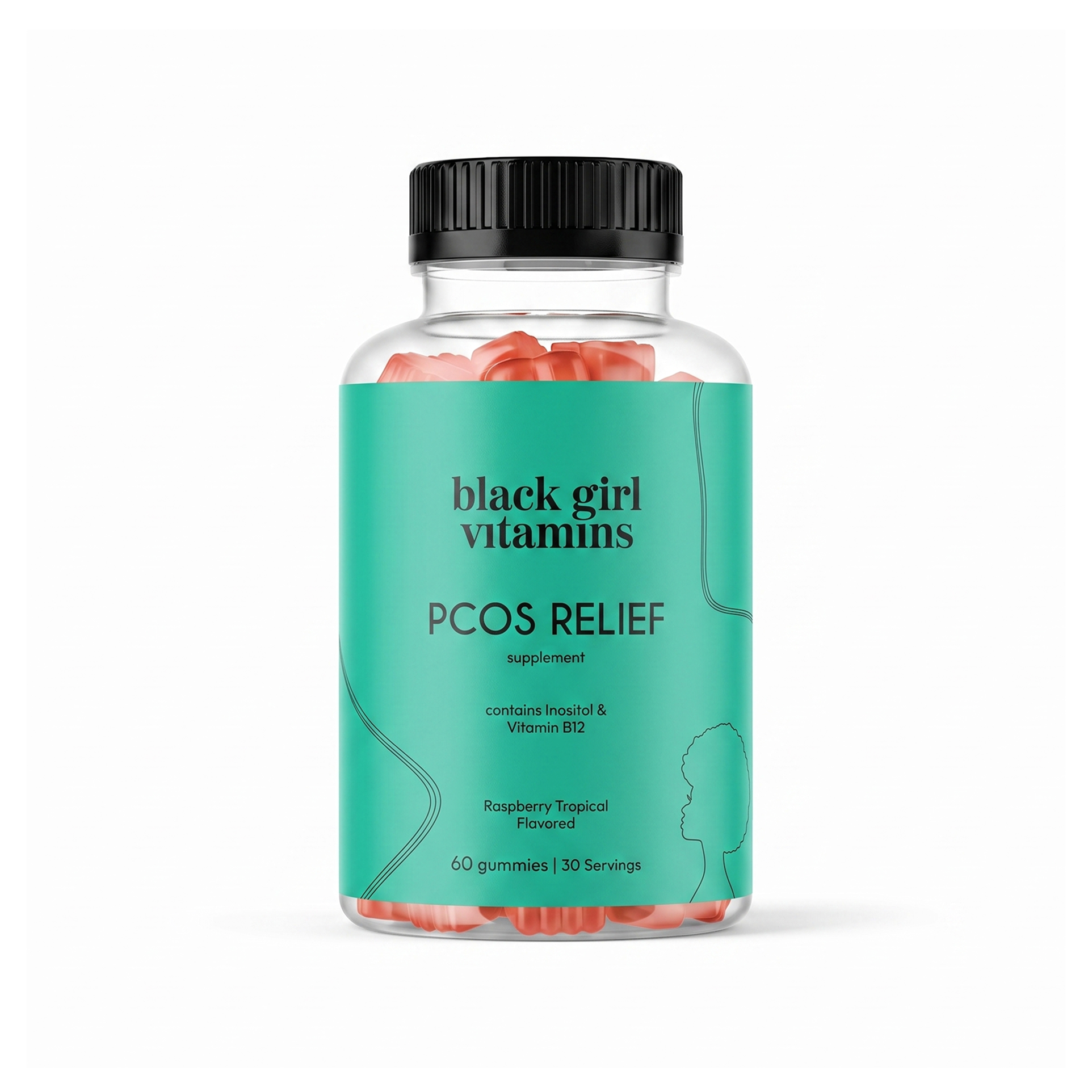
That's part of why we developed PCOS Relief, a 100% vegan supplement formulated with Black doctors, chemists, and women with PCOS. Focus group research also played an important role in understanding the concerns and symptoms Black women wanted support for.
The formula includes ingredients such as inositol, DIM, vitamin D, vitamin B12, zinc, spearmint, and raspberry to provide targeted nutritional support across areas associated with hormonal and metabolic wellness.
Inositol, in particular, has become an important ingredient in conversations around PCOS. Research has explored its role in areas that can be relevant for women managing PCOS.
PCOS Relief isn't intended to replace medical care or serve as a cure for PCOS. Instead, it's one part of a broader approach to supporting your health alongside appropriate medical care, nutrition, movement, and other healthy habits.
This PCOS Awareness Month, Let's Talk About More Than Symptoms
PCOS Awareness Month is about more than putting a purple ribbon on your social media profile.
It's about making sure Black women recognize the signs of PCOS. It's about creating spaces where talking about periods, fertility, hormones, and unwanted hair isn't embarrassing. It's about encouraging women to ask questions and making sure those questions are taken seriously.
Black women deserve reproductive healthcare that listens to them, education that prepares them to understand their bodies, and support that considers the full picture of their health.