














The 4 Types of PMOS Explained: Symptoms, Causes, and How to Support Each Type

Formerly known as PCOS, Polyendocrine Metabolic Ovarian Syndrome (PMOS) is a hormonal disorder among women in which the body produces too many male sex hormones, or androgens. This overproduction is influenced by many factors, including insulin resistance, stress, inflammation, genetics, medication, and more.
Excess androgens can disrupt ovulation, preventing immature eggs from entering the uterus. Instead, the eggs remain in the ovary and form small fluid-filled sacs called cysts (Mayo Clinic).
While 1 in 10 women experience PMOS, it remains under-researched and underfunded, especially in Black women. Knowing the four types of PCOS can make it easier to support your body and advocate for yourself. (OASH)
The 4 Types of PMOS Explained

Insulin Resistance
As the most common type of PMOS, insulin resistance occurs once the body becomes less responsive to insulin, leading to increased androgen production.
Common symptoms: stubborn weight, intense cravings, extreme fatigue, and infertility
Adrenal
When the body experiences chronic stress, the adrenal glands can overproduce androgens in response.
Common symptoms: acne, hair thinning, excessive body hair, irregular periods, and fatigue.
Inflammatory
Inflammatory PMOS occurs when the immune system triggers low-grade inflammation, leading to elevated androgens.
Common symptoms: fatigue, stubborn weight, acne, joint pain, headaches, and digestive issues
Post-pill
After stopping birth control, women can experience a temporary surge in androgens that mimics PMOS symptoms.
Common symptoms: irregular periods, severe acne, excessive hair growth, and hair loss.(Conlee, MD)
Targeted PMOS Relief

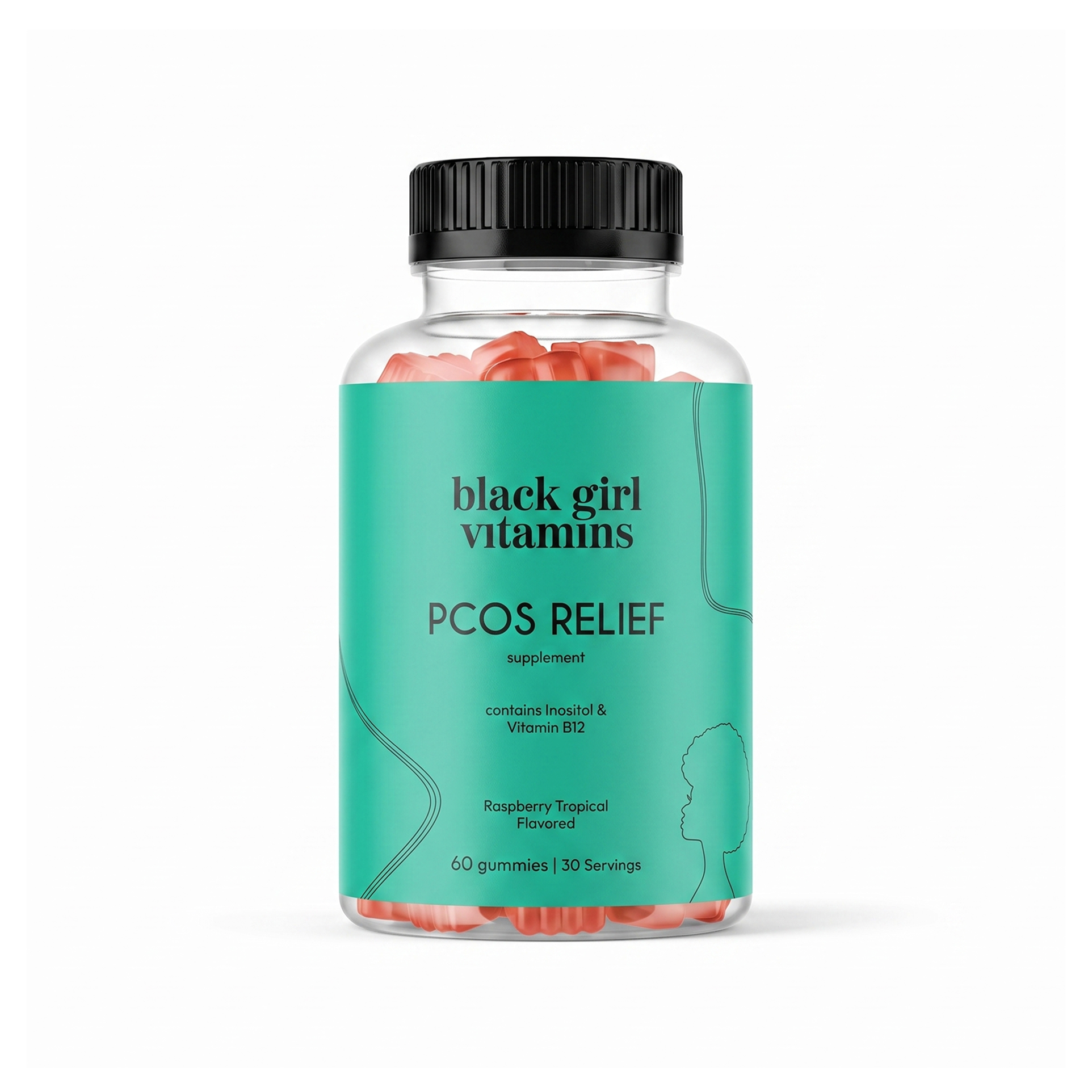
Since each type of PMOS affects the body differently, targeted support is necessary. Black Girl Vitamins developed PCOS Relief after years of extensive research, focus groups, and chemist formulations. Each ingredient was carefully selected to address the hormonal, metabolic, and inflammatory factors behind each type.
PCOS Relief Ingredient Breakdown
-
Inositol: Supports insulin sensitivity, weight management, hormone balance, ovulation, reduces acne, and excessive hair growth, supporting all types of PCOS.
-
DIM (Diindolylmethane): Helps regulate cycles, hormone surges, acne, and weight gain, most useful for post-pill and adrenal PCOS.
-
Vitamin D: Boosts energy, supports mood, and helps regulate inflammation.
-
Vitamin B12: Helps convert food into energy, supporting fatigue common in insulin-resistant and inflammatory PCOS.
-
Zinc: Supports immune health and reduces inflammation, which can ease symptoms of inflammatory PCOS.
Works Cited
Conlee, MD, Annevay. “What Are the Types of PCOS, and Can They Be Treated?” OSF
HealthCare, www.osfhealthcare.org/blog/what-is-pcos-and-can-it-be-cured. Accessed 31 Mar. 2026.
Galan, RN, Nicole. “Insulin Resistance in Women: Signs, Risks and What to Do Next.” Very
Well Health, www.hackensackmeridianhealth.org/en/healthier-you/2025/12/02/insulin-resistance-in-women. Accessed 31 Mar. 2026.
“Polycystic Ovary Syndrome (PCOS).” Mayo Clinic, Mayo Foundation for Medical Education
and Research, 8 Sept. 2022, www.mayoclinic.org/diseases-conditions/pcos/symptoms-causes/syc-20353439.
“Polycystic Ovary Syndrome: Office on Women’s Health.” OASH | Office on Women’s Health,
womenshealth.gov/a-z-topics/polycystic-ovary-syndrome. Accessed 31 Mar. 2026.